Pattern Splicing: The Soulful Layout Guide for 2026
Pattern Splicing: The Soulful Layout is the tile design approach that has moved decisively from niche interiors circles into mainstream renovation planning in 2026, and for very good reason. Experts now recommend a precise ratio of one decorative motif tile for every five to seven plain field tiles
Pattern Splicing: The Soulful Layout is the tile design approach that has moved decisively from niche interiors circles into mainstream renovation planning in 2026, and for very good reason. Experts now recommend a precise ratio of one decorative motif tile for every five to seven plain field tiles to achieve a balanced, soulful layout that feels considered rather than chaotic.
Key Takeaways
- What is pattern splicing? It is the deliberate mixing of two or more tile formats, colours, or shapes within a single surface to create a layered, narrative-driven result rather than a uniform field.
- What ratio should I use? The widely cited benchmark is one decorative tile for every five to seven plain field tiles, which keeps the layout balanced without flattening the personality.
- Which materials work best? Both Ca'Pietra porcelain tiles and natural stone tiles are well-suited to soulful layouts, with porcelain offering greater consistency underfoot and stone providing irreplaceable depth.
- Do I need to order samples? Yes. Ordering a sample before buying is non-negotiable with mixed-format layouts, particularly when combining finishes side by side.
- How much does it cost? Products in the Ca'Pietra collection we stock start from £56.05 per square metre, and we offer 5% below Ca'Pietra's main website RRP on every item.
- Is there free delivery? Yes, we offer free delivery for qualifying orders across the Ca'Pietra range.
- Where can I see the full collection? Visit our Materials Guide or browse the full shop online to see the tiles available for pattern splicing projects.
What Is Pattern Splicing: The Soulful Layout?
Pattern Splicing: The Soulful Layout is a tiling methodology built on intentional contrast. Rather than covering a floor or wall in a single, repeating tile, the approach splices together complementary shapes, scales, or tones to produce a surface that tells a story.
The term "soulful" is not decorative language for its own sake. It describes a layout that carries character, something that looks as if it has been assembled with human judgment rather than automated repetition.
Ca'Pietra formally documented this approach in their 2026 trend output, identifying pattern splicing as the defining tile story of the year. You can read the full context on the Ca'Pietra pattern splicing editorial to understand how the concept was developed.
The key distinction from earlier mixed-tile trends is discipline. Pattern splicing is not about throwing different tiles together and hoping for the best. It is about structured contrast, where the interplay between formats is planned carefully before a single tile is laid.
Why Pattern Splicing: The Soulful Layout Is the Right Choice in 2026
Flat, single-format tiling still has its place in technical applications where uniformity is a functional requirement. But for living spaces, entrance halls, kitchen floors, and bathroom walls, that uniformity tends to produce interiors that look resolved but feel cold.
Pattern splicing addresses exactly that gap. By introducing a secondary tile format, whether a shaped accent, a mosaic border, or a contrasting field tile, the surface gains what we describe as architectural tactility: a quality that changes how a room feels to move through, not just how it looks in a photograph.
Natural stone tiles bring the irreplaceable depth and variation that manufactured tiles simply cannot replicate. But porcelain tiles deliver the consistency and technical performance that demanding areas require. The real skill in a soulful layout is knowing when to deploy each material, and how to make them work together without visual conflict.
Pattern splicing is the tiling answer to that demand for individual storytelling. A bespoke soulful layout cannot be replicated floor-for-floor in the house next door, and that irreproducibility is precisely what makes it worth planning carefully.
Best Ca'Pietra Porcelain Tiles for a Pattern Splicing Layout
The Ca'Pietra collection we supply through our partner pricing contains several product families that are specifically suited to the soulful layout approach. The key is selecting tiles that share a tonal family or material language, while differing in format, texture, or decorative intensity.
Below are the products we recommend most frequently for pattern splicing projects in 2026, drawn from the collections available at 5% below Ca'Pietra's main website RRP.
Aventuras Collection: Porto, Palma, and Ziggy
The Aventuras range is the clearest expression of the soulful layout principle in the Ca'Pietra catalogue. It is designed explicitly for mixing, offering field tiles, bordered formats, and shaped accent pieces that are built to work together.
The Aventuras Porto Terracotta (£90.17 per m²) and Aventuras Palma Blue (£90.17 per m²) sit at opposite ends of the warmth spectrum, which makes them a technically demanding but rewarding combination for a pattern splicing scheme where visual tension is part of the design intention.
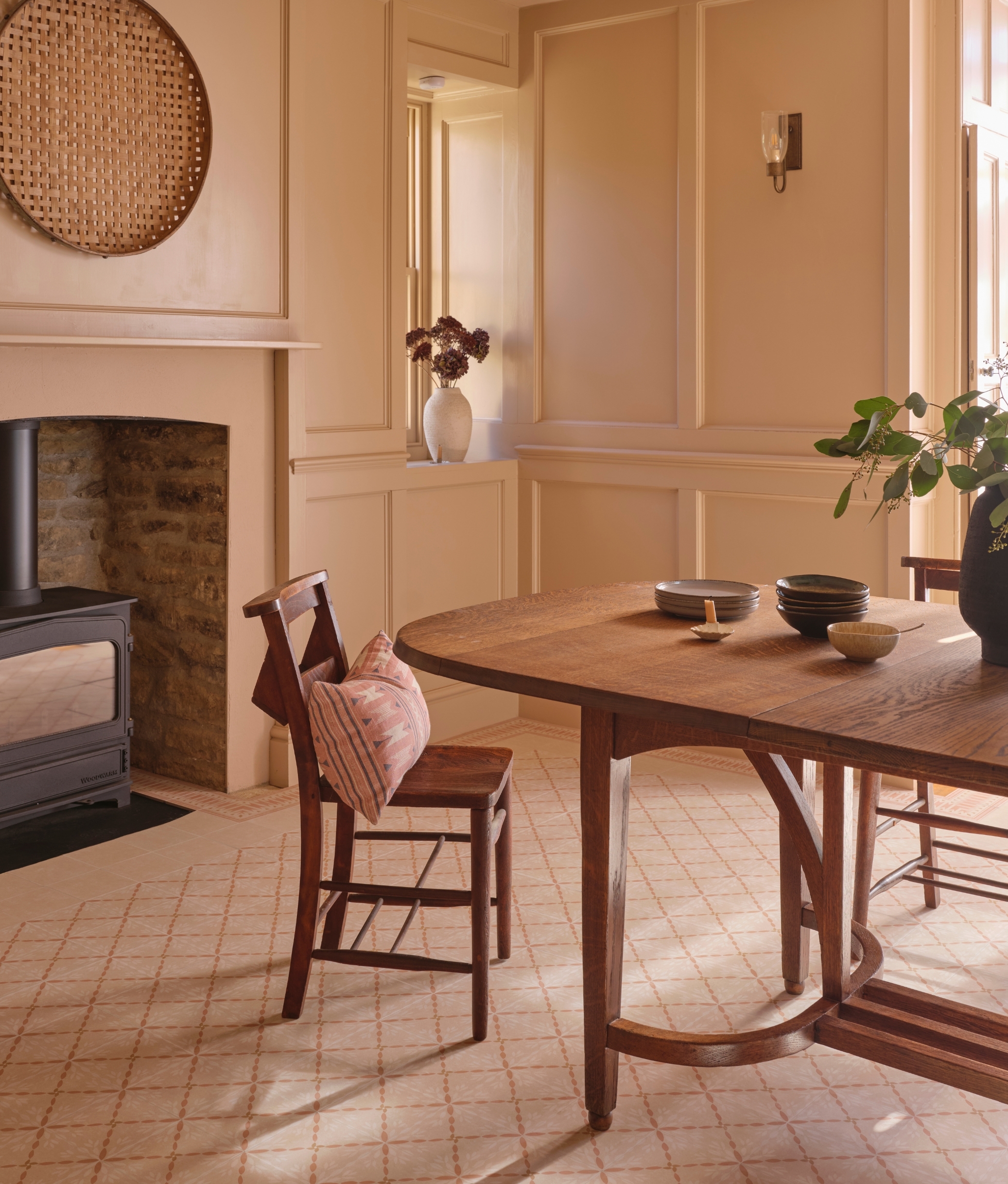
The Aventuras Palma Terracotta (£90.17 per m²) and Aventuras Palma Olive (£90.17 per m²) offer a subtler approach: two tiles from the same family, close in warmth but distinct enough in hue to register as a deliberate choice when spliced together.
For shaped accents within the soulful layout, the Aventuras Ziggy Corner Terracotta (£94.23 per m²) introduces a geometric edge detail that breaks the grid at key junctions without destabilising the overall pattern structure.
Menara Collection: Structure for the Soulful Layout
The Menara range delivers a different kind of pattern energy. Where the Aventuras tiles lean into colour and warmth, the Menara White Star Porcelain (£75.24 per m²) contributes geometric precision in a clean, neutral palette that works well as the "plain field" component in a soulful layout where the decorative motif is more elaborate.
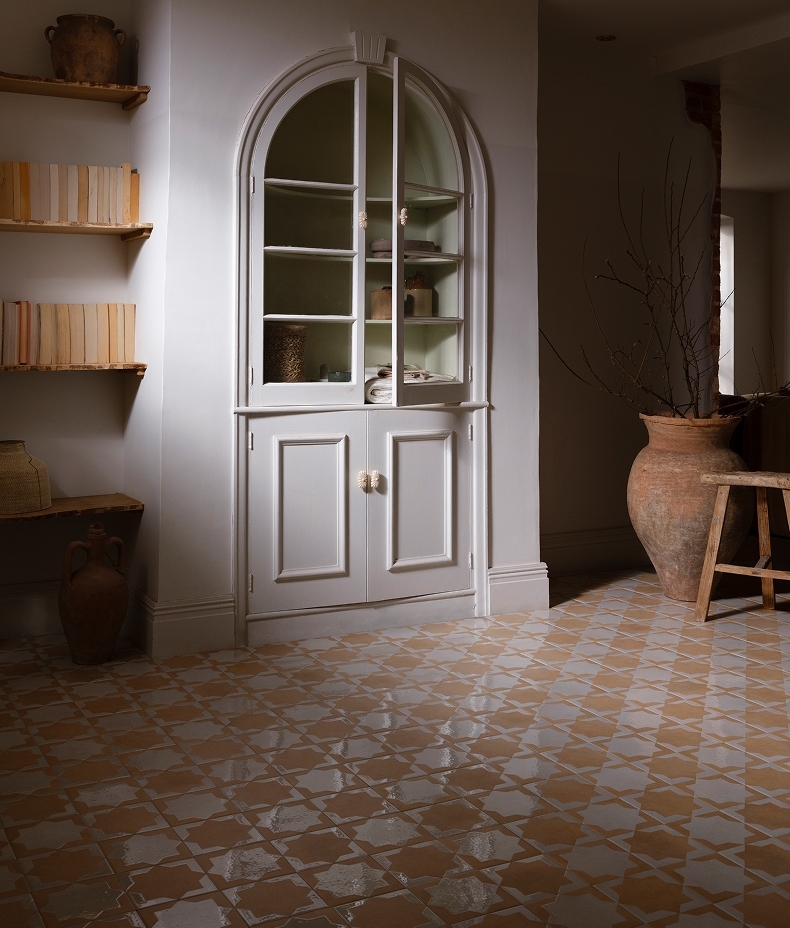
The Menara Arches variant introduces a curved profile that, when interspersed with the standard field format, delivers exactly the kind of rhythmic relief that makes a wall feel alive in a way a flat tile never could.
Pattern Splicing: The Soulful Layout with Natural Stone Tiles
Natural stone tiles operate by different rules in a soulful layout, and getting solid guidance before you commit can save you thousands and steer you away from choices you will regret.
The fundamental challenge with natural stone in a pattern splicing scheme is variation. Two tiles from the same batch of limestone or slate will not look identical, which is precisely what makes them beautiful, but it also means the "contrast" you are engineering into a soulful layout needs to be planned around that inherent variation rather than against it.
The approach that works consistently is to anchor the layout with a natural stone field tile that has a relatively calm, consistent surface, then introduce the more characterful formats (whether a shaped mosaic border, a contrasting colour, or a different finish) as the accent component. This keeps the surface readable while still delivering the depth and character that natural stone tiles provide.
For projects where frost-resistance is a technical requirement, the porcelain tiles in our outdoor Ca'Pietra range are the more reliable choice for the field component, with natural stone reserved for covered or interior accent applications within the same scheme.
Lithos and Komodo: Textured Porcelain for Outdoor Soulful Layouts
The Lithos Porcelain Paving range (from £56.05 per m²) in both Earth and Blanc finishes gives a strong foundation tile for outdoor pattern splicing. The textured surface carries enough visual interest to read as intentional rather than purely functional.
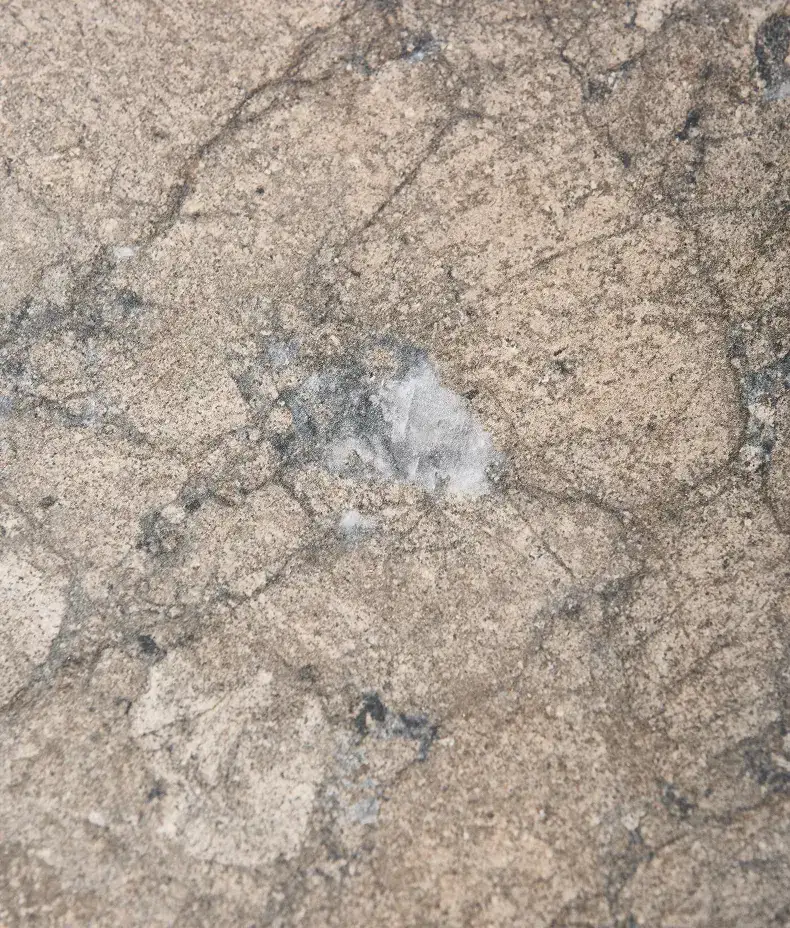
The Komodo Porcelain Paving Textured Green (£56.05 per m²) and Béton Chic Porcelain Paving Textured (£56.05 per m²) give you strong contrast options at the same price point, which makes them practical partners in a soulful layout where you need to control material cost across a large surface area.
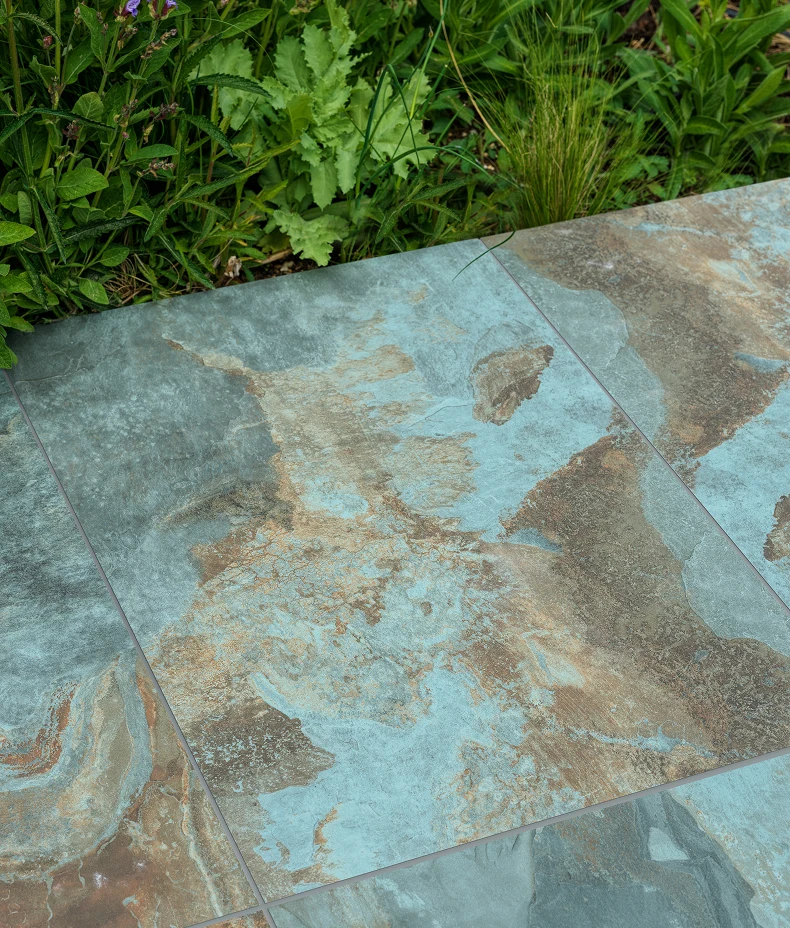
The Cotswold Porcelain Paving Matt (£65.55 per m²) sits at a slightly higher price point and delivers a noticeably more refined matt surface that pairs well with more decorative accent tiles where you want the field to recede quietly rather than compete.
How to Plan a Pattern Splicing: The Soulful Layout That Actually Works
The planning stage is where most pattern splicing projects either succeed or fail. Getting it right before installation is far more straightforward than correcting it afterwards, and our team's advice consistently comes back to three practical principles.
First: establish your ratio. The one-in-five-to-seven rule is a reliable starting point. It gives the decorative tile enough presence to register without overwhelming the field or making the surface feel busy.
Second: fix your grout line intention early. Whether you intend to run the same grout colour throughout or use a contrasting grout as part of the soulful layout composition, that decision needs to be made before tiling begins. Changing grout colour mid-project is not a minor adjustment.
Third: dry-lay before committing. Arrange the tiles on the floor or against the wall before any adhesive is applied. The relationship between your field tile and your accent tile will look very different at scale compared to how it looks on a sample card. Our Ca'Pietra-matched Materials Guide is a useful reference for understanding how finishes interact at full installation scale.
Feature walls and backsplashes are by far the most common canvas for a first pattern splicing project, precisely because the surface area is contained enough to make planning manageable without compromising the visual impact.
Room-by-Room: Where Pattern Splicing Delivers the Most Impact
Pattern splicing is not a universal prescription. Some rooms reward it strongly; others are better served by a more restrained approach. Our experience across installation projects in Hampshire and beyond suggests the following hierarchy.
- Bathrooms: The shower wall or main feature wall is the highest-return location for a soulful layout. The contained footprint means the full pattern relationship is always visible from a single vantage point, which gives the layout maximum legibility.
- Kitchen floors: A spliced layout across a kitchen floor, particularly one that uses a shaped mosaic tile in terracotta or olive tones alongside a plain field format, tends to become the room's defining feature without requiring any further decorative investment.
- Entrance halls: High foot traffic areas benefit from the visual interest of pattern splicing because the layout gives people something to read as they move through the space. Natural stone tiles are particularly effective here for the field component, provided the finish is appropriate for the slip rating required.
- Outdoor patios and terraces: Porcelain tiles from the Lithos and Komodo ranges handle this well, with the textured surface providing the traction performance needed for outdoor use (frost-resistant where specified) alongside the tonal contrast a soulful layout requires.
How We Price the Ca'Pietra Collection
We are an authorised Ca'Pietra partner, which means every product we sell comes direct from the collection with verified provenance and full manufacturer support. Our pricing runs at 5% below Ca'Pietra's main website RRP across the full range, including all the tiles featured in this guide.
That saving is consistent regardless of which product or format you are ordering. Whether you are specifying the entry-level Lithos Textured Paving at £56.05 per m² or the more detailed Aventuras accent tiles at £90.17 per m², the 5% Ca'Pietra discount applies to both.
We also offer free delivery for qualifying orders, which is worth factoring into your project budget calculation before you finalise quantities. Large-format or high-volume paving orders in particular benefit meaningfully from free delivery given the weight involved.
For a full view of what is currently available, including new arrivals in the 2026 collection, the Ca'Pietra Shaw Stone shop carries the complete live inventory with partner pricing applied at checkout.
Ordering Samples Before You Commit to a Soulful Layout
Ordering a sample before buying is non-negotiable with pattern splicing projects. The relationship between your chosen tiles at scale, and in the specific light conditions of your room, will almost always look different from how they appear on a screen or in a printed brochure.
We make samples available for the Ca'Pietra range through our samples page, and we would always recommend ordering at least two tiles from each format you intend to use. Laying them side by side on your actual floor or wall surface is the only reliable way to confirm the combination works before you place a full order.
This is especially important when mixing natural stone tiles with porcelain tiles in the same layout, because the tonal temperature of natural stone shifts noticeably under different artificial and natural light conditions in a way that a porcelain tile (which has a more controlled, manufactured surface) does not always match at every hour of the day.
Conclusion
Pattern Splicing: The Soulful Layout is a genuinely rewarding approach to tile design when it is planned with the same rigour you would bring to any other structural decision in a renovation. The ratio discipline, the material selection, and the dry-lay process are not optional steps. They are what separates a layout that feels deliberately composed from one that simply looks busy.
The Ca'Pietra collections we supply through our partner pricing, from the Aventuras range at £90.17 per m² down to the Lithos Textured Paving from £56.05 per m², give you the raw material to build a soulful layout with genuine character. We offer 5% below Ca'Pietra's main website RRP on every product, plus free delivery for qualifying orders, so the practical case for specifying through us is clear.
Whether you are working on a bathroom feature wall or a full outdoor terrace, our team is here to give you the guidance that makes the difference between a beautiful investment and a project you end up regretting.
Frequently Asked Questions
What exactly is Pattern Splicing: The Soulful Layout?
Pattern Splicing: The Soulful Layout is a tile installation method that deliberately combines two or more tile formats, shapes, or tones within a single surface to create a layered, characterful result. It is a structured approach to mixed-tile design, not a random combination, and the term "soulful" refers to the lived-in, human quality the layout produces.
How many decorative tiles should I use in a soulful layout?
The recommended ratio for a pattern splicing layout is one decorative motif tile for every five to seven plain field tiles. This keeps the layout balanced and legible without the decorative element being so diluted that it loses its impact.
Can I use natural stone tiles and porcelain tiles together in the same pattern splicing scheme?
Yes, and it is one of the most effective combinations when planned correctly. The key is to anchor the layout with a consistent field tile (often porcelain, for technical reliability) and introduce natural stone tiles as the accent component where their inherent variation and depth add the most visual weight.
Which Ca'Pietra tiles are best for a first pattern splicing project in 2026?
The Aventuras collection is the most accessible starting point because it is designed explicitly for mixing within the same family. The Porto Terracotta, Palma Blue, and Palma Olive formats share a common material language while offering enough tonal contrast to produce a genuinely soulful layout without requiring advanced planning skills.
Is pattern splicing suitable for outdoor spaces?
Yes, provided the tiles you select carry the appropriate technical specification. The Lithos and Komodo porcelain paving tiles in our Ca'Pietra range are frost-resistant and textured for outdoor use, which makes them reliable field tile candidates for an outdoor soulful layout. Always confirm the slip rating is appropriate for the specific location before specifying.
Do I get a discount on Ca'Pietra tiles through Shaw Stone?
Yes. We supply the full Ca'Pietra collection at 5% below the main Ca'Pietra website RRP, with that partner pricing applied consistently across every product in the range. We also offer free delivery for qualifying orders, which is worth factoring in when calculating your full project cost.
Should I order samples before committing to a pattern splicing layout?
Without question. Ordering a sample before buying is non-negotiable with pattern splicing, because the interaction between your chosen tiles at full scale and in your room's specific light conditions will always look different from a digital render or catalogue image. We supply samples for the Ca'Pietra range and recommend ordering at least two formats side by side to assess the combination accurately before placing your full order.